
Brown spot removal depends on the cause. Professional cleaning may remove surface stains, while tooth decay or enamel defects require a dentist’s assessment first and potentially restorative or cosmetic treatment.
Brown spots can come from coffee and tea stains, hardened tartar, tooth decay or changes in the enamel. If you’re wondering how to get rid of brown spots on teeth, first identify the cause. Cleaning removes some surface stains, but it cannot repair a cavity or correct every enamel defect. A dental examination helps determine the right treatment for you.
Key Takeaways
- Identify the cause of a brown spot before choosing cleaning, whitening or restorative treatment.
- Professional cleaning can remove suitable surface stains and hardened tartar that brushing cannot shift.
- Teeth whitening changes the shade of natural teeth but cannot repair cavities or lighten existing fillings and crowns.
- Arrange a dental examination for new, spreading, persistent or painful brown spots, even if there is no obvious cavity.
What Causes Brown Spots on Teeth?
Brown spots can appear as surface stains from everyday habits, collect around the gumline as plaque hardens, or develop when tooth enamel changes or decay damages the tooth. A mark on the front surface may have a different cause from a dark patch in a tooth groove or a yellow-brown area affecting the enamel.
The main causes include:
Stains from Coloured Foods and Drinks
Tea, coffee, red wine and strongly coloured foods can leave pigments on the enamel. Each time you consume them, more colour may collect on the tooth surface. Over time, this build-up can create visible brown stains, particularly in areas that are harder to clean thoroughly.
Smoking and Tobacco Use
Tobacco products can leave stubborn brown deposits on tooth surfaces, especially around the gumline. Repeated exposure can make the staining more difficult to remove through everyday brushing.
Plaque and Tartar Build-Up
Plaque traps food pigments and bacteria against the teeth. When plaque hardens into tartar, it can create yellow-brown deposits, particularly between teeth and near the gums.
Tooth Decay and Cavities
Decay can produce brown, dark or black marks as tooth tissue breaks down. A brown mark does not automatically mean there is a cavity, and early decay may develop without pain.
Enamel Defects and Demineralisation
Brown patches can develop when enamel does not form properly or loses minerals. These changes may also create white or yellow areas, pits or rough patches. One example is molar-incisor hypomineralisation (MIH), a developmental condition that commonly affects the first permanent molars and can also affect the front teeth.
A 2025 British Dental Journal study surveyed 17 UK postgraduate paediatric dentistry students about MIH. Although 71% said they encountered the condition multiple times a week, none provided a complete definition matching the cited clinical criteria.
The study did not measure how common MIH is among children. But it highlights why brown patches need proper assessment to identify the enamel condition before treatment is chosen.
Fluorosis and Certain Medications
Dental fluorosis develops while teeth are forming and can cause changes in enamel appearance. Mild cases usually produce white markings, while more pronounced defects can include brown areas. Certain medications taken during tooth development can also affect tooth colour.
Age-Related Enamel Changes
Enamel gradually wears and changes over time, allowing more of the naturally yellowish dentine underneath to show through. This can make teeth look darker and can make existing surface stains more noticeable.
How Can You Get Rid of Brown Spots on Teeth (Treatment Options)
A brown spot caused by tea or coffee may lift during professional cleaning, while one caused by tooth decay could need a filling. Discolouration within the enamel may require a different approach altogether. Whitening will not fix a cavity, so identifying what caused the mark is the first step towards choosing the right treatment.
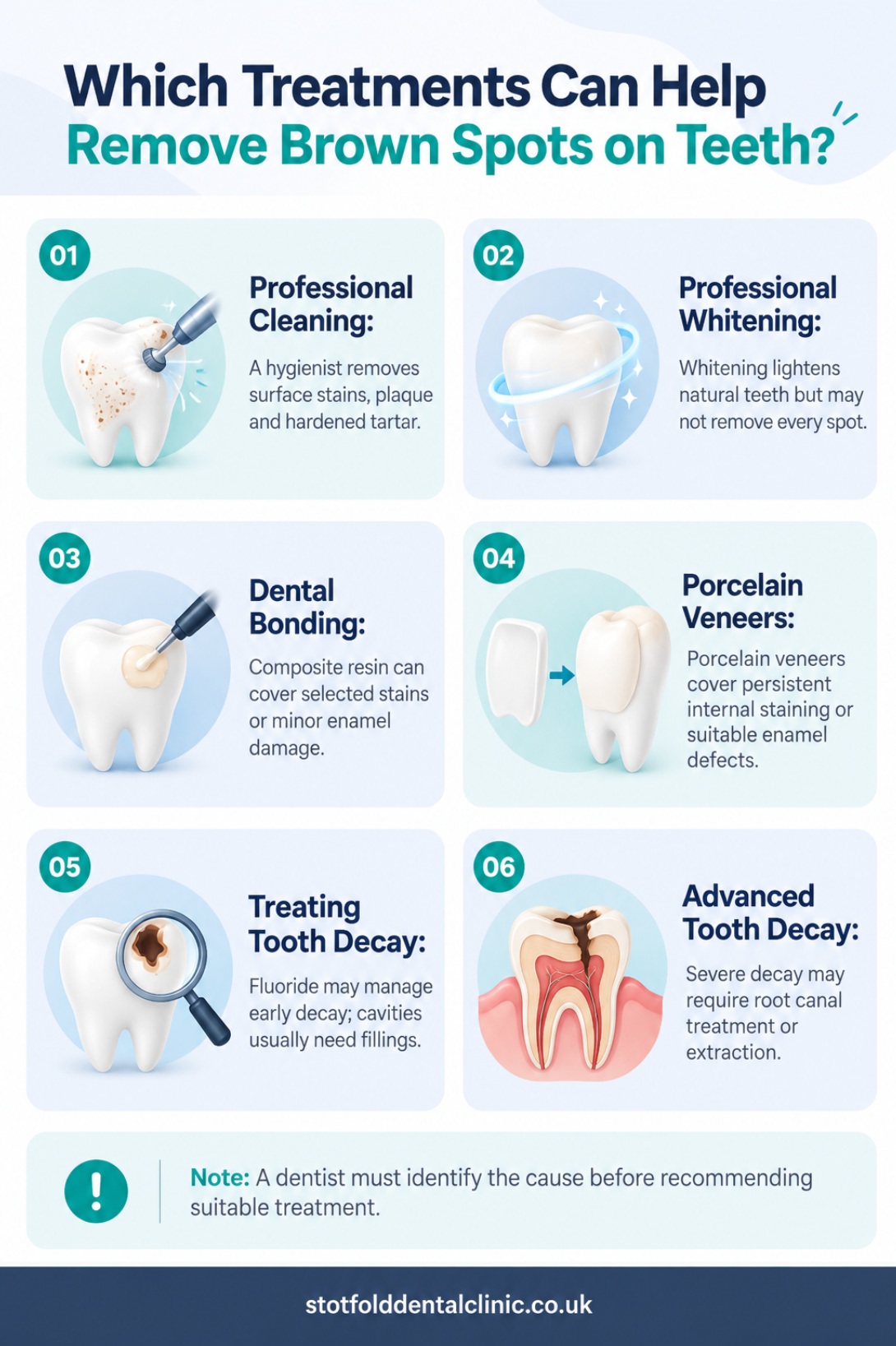
The options range from professional cleaning to restorative or cosmetic treatment, depending on the diagnosis:
Professional Teeth Cleaning
A hygienist can remove suitable external stains, plaque and hardened tartar using a scale and polish or Airflow stain removal where appropriate. Our professional dental hygiene and stain removal service describes these options for deposits and staining associated with tea, coffee, red wine and smoking.
Cleaning cannot repair a cavity or reliably remove discolouration within the enamel.
Professional Teeth Whitening
Professional whitening can lighten the natural shade of your teeth, but it may not remove every brown spot. If a mark comes from tooth decay or an enamel defect, whitening will not repair the damage. A dentist needs to identify the cause before recommending cosmetic treatment.
The General Dental Council’s tooth whitening guidance states that a registered dentist must assess you and prescribe whitening treatment. A registered dentist can provide the treatment, or a registered dental hygienist, dental therapist or clinical dental technician can carry it out on that dentist’s prescription. Unregistered beauty providers cannot legally offer tooth whitening.
Dental Bonding
A dentist can apply tooth-coloured composite resin to cover selected areas of persistent discolouration or minor enamel damage. Composite bonding may improve the appearance of suitable teeth after the underlying cause has been assessed.
Porcelain Veneers
Porcelain veneers may be considered for persistent internal staining or enamel defects that cannot be managed with less invasive options. They cover the visible tooth surface. But suitability depends on the tooth’s condition and the amount of healthy enamel that can be preserved.
Treating Tooth Decay
Brown spots caused by decay need treatment for the underlying damage, not whitening. The right treatment depends on how far the decay has progressed.
The NHS guidance on tooth decay states that early decay may be managed with fluoride treatment to help stop it progressing, while a cavity usually needs a filling.
If decay reaches the pulp, the soft tissue inside the tooth containing nerves and blood vessels, root canal treatment may be needed. If the tooth cannot be saved, extraction may be necessary.
Professional Cleaning Versus Whitening
Cleaning removes suitable surface deposits, whitening changes the shade of natural teeth, and restorative treatment repairs damaged tooth tissue. A mark that remains after cleaning needs assessment before cosmetic treatment is chosen.
Are Brown Spots on Teeth a Sign of Tooth Decay?
Brown spots can indicate tooth decay, but stains, tartar and enamel defects can look similar. Warning signs include:
- Dark marks in tooth grooves
- Visible pits or holes
- A rough surface
- Sensitivity to hot
- Cold or sweet foods
- And spots that grow or change.
However, early decay may cause no pain.
The Adult Oral Health Survey 2023 found that 64% of adults in England had clinical decay under its broadest measure, which included enamel decay and decay affecting crown or root surfaces. This statistic measures tooth decay, not the prevalence of brown spots. A dentist must examine the affected tooth to distinguish staining from decay or an enamel defect.
How Can You Prevent Brown Spots on Teeth?
Preventing brown spots means reducing surface staining, limiting plaque build-up and lowering your risk of tooth decay. Make these habits part of your daily routine:
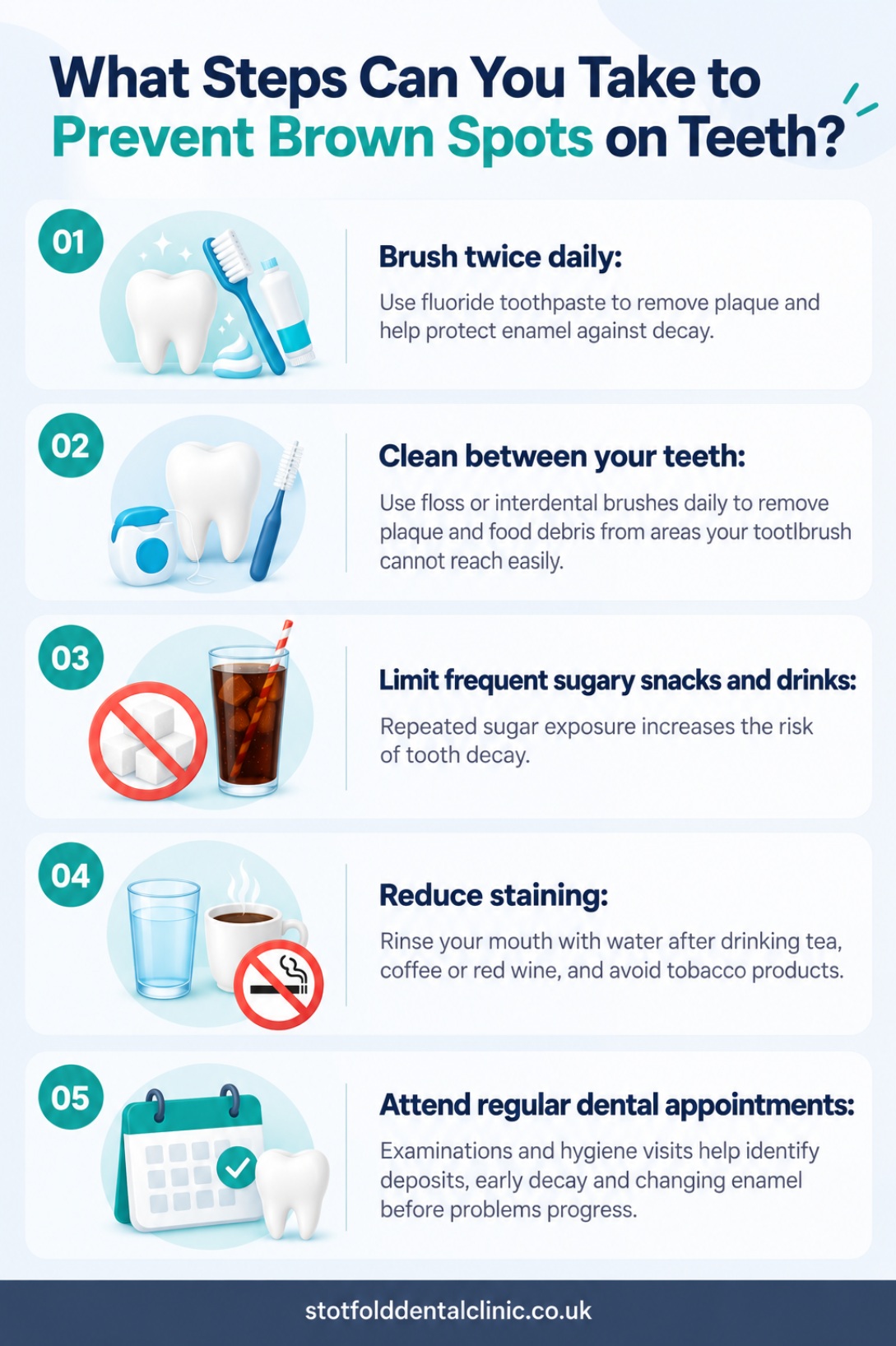
A new or changing brown spot should be assessed by a dentist rather than treated with whitening products at home.
When Should You See a Dentist?
Book a dental appointment if a brown spot is:
- New
- Unexplained
- Persistent
- Spreading
- Rough or pitted.
Sensitivity or pain also warrants an assessment, but a painless mark can still be caused by decay.
A dentist can examine the tooth and decide whether the area needs cleaning, monitoring, preventive care or restorative treatment. Do not wait for pain before getting suspected decay checked.
Facial or jaw swelling requires urgent dental advice, particularly if it is worsening or spreading. Difficulty breathing or swallowing alongside swelling is a medical emergency and requires immediate emergency care.
How Long Do Dental Bridges Last?
Dental bridges can remain functional for years, but their longevity depends on the design, supporting teeth, position in the mouth and ongoing dental care.
A University of Birmingham study published in 2012 analysed records for more than 80,000 adult NHS patients in England and Wales. It found that conventional bridge abutments, the teeth supporting the bridge, had a 72% survival rate at ten years. The study also found that bridge type, tooth position and attendance patterns affected outcomes.
This is an older study, but it provides a large UK evidence base. Its 72% figure relates to the supporting teeth under the study’s definition of survival, not a guarantee that every bridge lasts ten years. Regular check-ups and cleaning around the bridge help your dentist monitor the supporting teeth and gums.
When Should You Contact Your Dentist?
Contact your dentist promptly if you experience persistent pain around a bridge, swelling of the gums, or a bridge that feels loose or becomes dislodged. These symptoms may indicate problems with:
- The restoration itself
- The supporting tooth
- Surrounding gum tissue
- Other tissues around the bridge
A dental examination can help identify the cause and determine whether treatment is needed.
If the bridge comes out, keep it safe and tell your dentist what happened. Do not try to secure it with household glue. Your dentist can advise whether it can be refitted or needs repair or replacement. Seek urgent medical help if swelling is severe or you have difficulty breathing or swallowing.
Am I Suitable for Dental Bridge Treatment?
Suitability depends on the health and strength of the teeth that would support the bridge, the condition of your gums and the position of the gap. Your dentist will also consider your bite and whether an implant-supported bridge or another replacement option would be more appropriate.
The Adult Oral Health Survey 2023, published by the UK government, found that only 2.5% of adults in England reported having no natural teeth, while 86% of adults who retained natural teeth had 21 or more. These figures show that complete tooth loss is uncommon and many adults retain natural teeth.
However, the national statistics cannot establish whether your particular supporting teeth are healthy enough for a bridge. That requires an individual dental assessment.
FAQs
Can Brown Spots on Teeth Go Away on Their Own?
Surface stains may lessen with improved cleaning, but tartar, decay and enamel defects will not simply disappear.
Can Teeth Whitening Remove Brown Stains?
It may lighten natural teeth, but it cannot repair decay or change the colour of existing restorations.
Are Brown Spots on Teeth Always Cavities?
No. Surface stains, tartar and enamel defects can also cause brown marks.
Can Brushing Remove Brown Spots?
Brushing may help prevent new stains but cannot remove hardened tartar or repair a cavity.
Why Do I Have Brown Spots Between My Teeth?
Pigments, plaque, tartar or decay can collect between teeth. A dentist can identify the cause.
What Is the Fastest Way to Remove Brown Stains from Teeth?
Professional cleaning may remove surface stains in one appointment. Decay and enamel changes need diagnosis and suitable treatment.
Conclusion
Brown spots need the right diagnosis before treatment. Professional cleaning can remove surface staining, while decay or enamel defects require different care. Stotfold Dental Clinic offers hygiene appointments, whitening and cosmetic dentistry options to help patients choose suitable treatment after an assessment.
Concerned about brown spots on your teeth? Contact us today to arrange an assessment and discuss suitable treatment options.
This article is for general information only and should not replace professional dental advice. If you are concerned about brown spots on your teeth, want to identify their cause, or explore professional cleaning, whitening and other treatment options, book a consultation with one of our dentists at Stotfold Dental Clinic for a personalised assessment and suitable treatment recommendations.