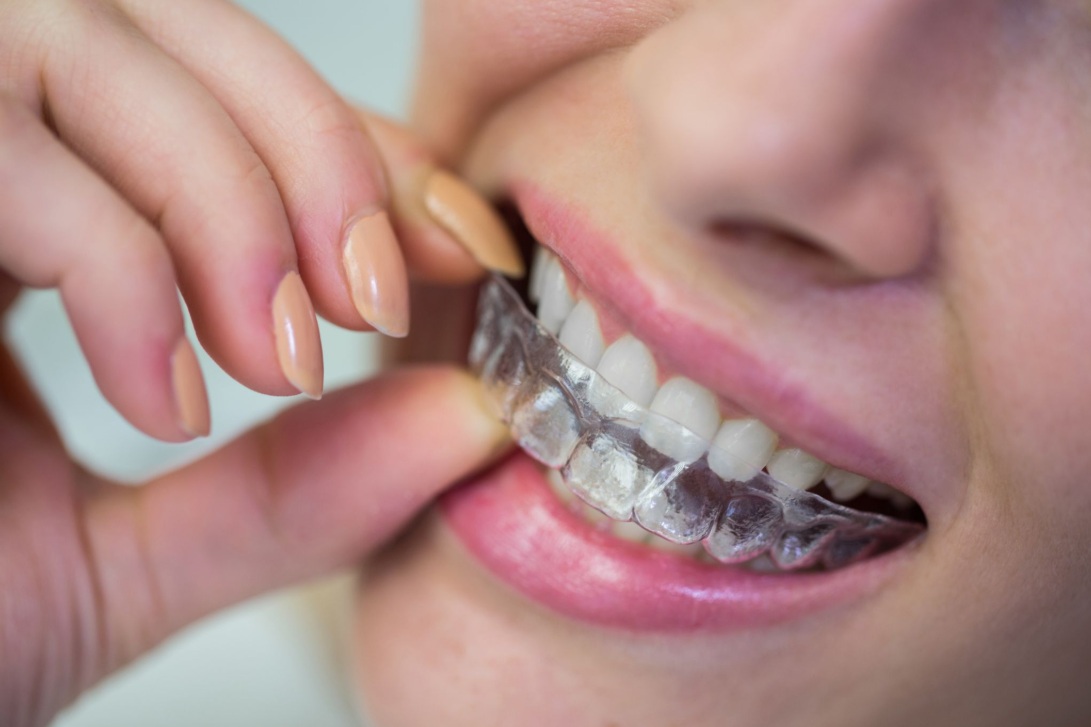
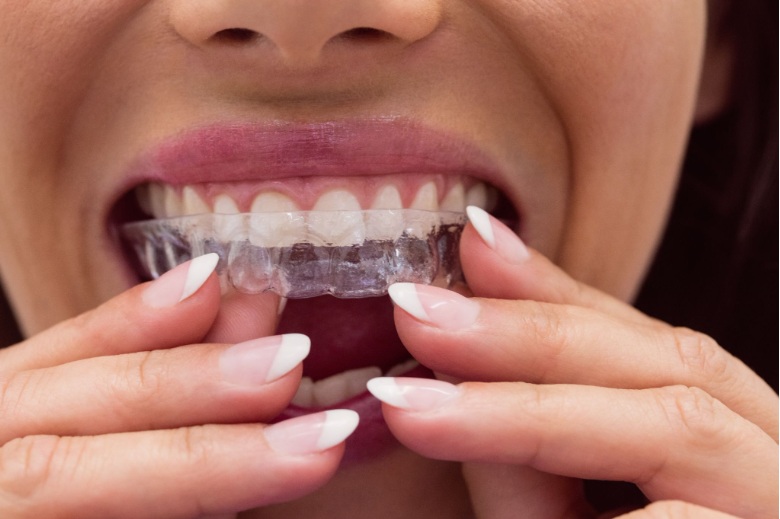
There is no single better option. Invisalign suits people prioritising discretion and removability, while braces can offer greater control for complex movements. A clinical assessment determines suitability.

Invisalign and braces both move teeth by applying controlled pressure over time. They differ in appearance, comfort, removability and daily care. They also suit different types of orthodontic problems. Invisalign depends more heavily on patient compliance. Braces remain fixed throughout treatment. The right option depends on your teeth, treatment goals and lifestyle.
Key Takeaways
- Invisalign offers discretion and can be removed for eating and cleaning.
- Fixed braces provide continuous control throughout treatment, including complex movements.
- NHS orthodontics has strict eligibility criteria, while Invisalign is generally privately funded.
- A full clinical assessment is essential before choosing either treatment.
What Are Invisalign and Braces?
Invisalign and traditional braces both move teeth gradually, but they use very different appliances. Invisalign uses a series of removable clear aligners, while braces use brackets and wires fixed to the teeth.
How Invisalign (Clear Aligners) Works
Invisalign uses a sequence of custom made clear plastic aligners. Each aligner is designed to apply controlled pressure to specific teeth, gradually moving them towards the planned final positions.
The treatment is planned digitally, with a series of stages mapping out the expected tooth movements. The aligners are removable, so patients take them out for eating, drinking and cleaning before putting them back in as prescribed.
Our Invisalign treatment service uses dentist led treatment planning to assess whether clear aligners are suitable for the individual case.
How Traditional Braces Work
Traditional fixed braces use brackets bonded to the teeth and connected with wires. The wire applies controlled pressure, while regular appointments allow the orthodontist to adjust the appliance as the teeth move.
Because the appliance remains attached throughout treatment, it continues working without the patient needing to remember to put it back in. Fixed braces can also provide precise control over tooth movement across a wider range of orthodontic cases.
Invisalign vs Braces (How Do They Compare)?
The two treatments can achieve similar goals in suitable cases, but the day to day experience is quite different.
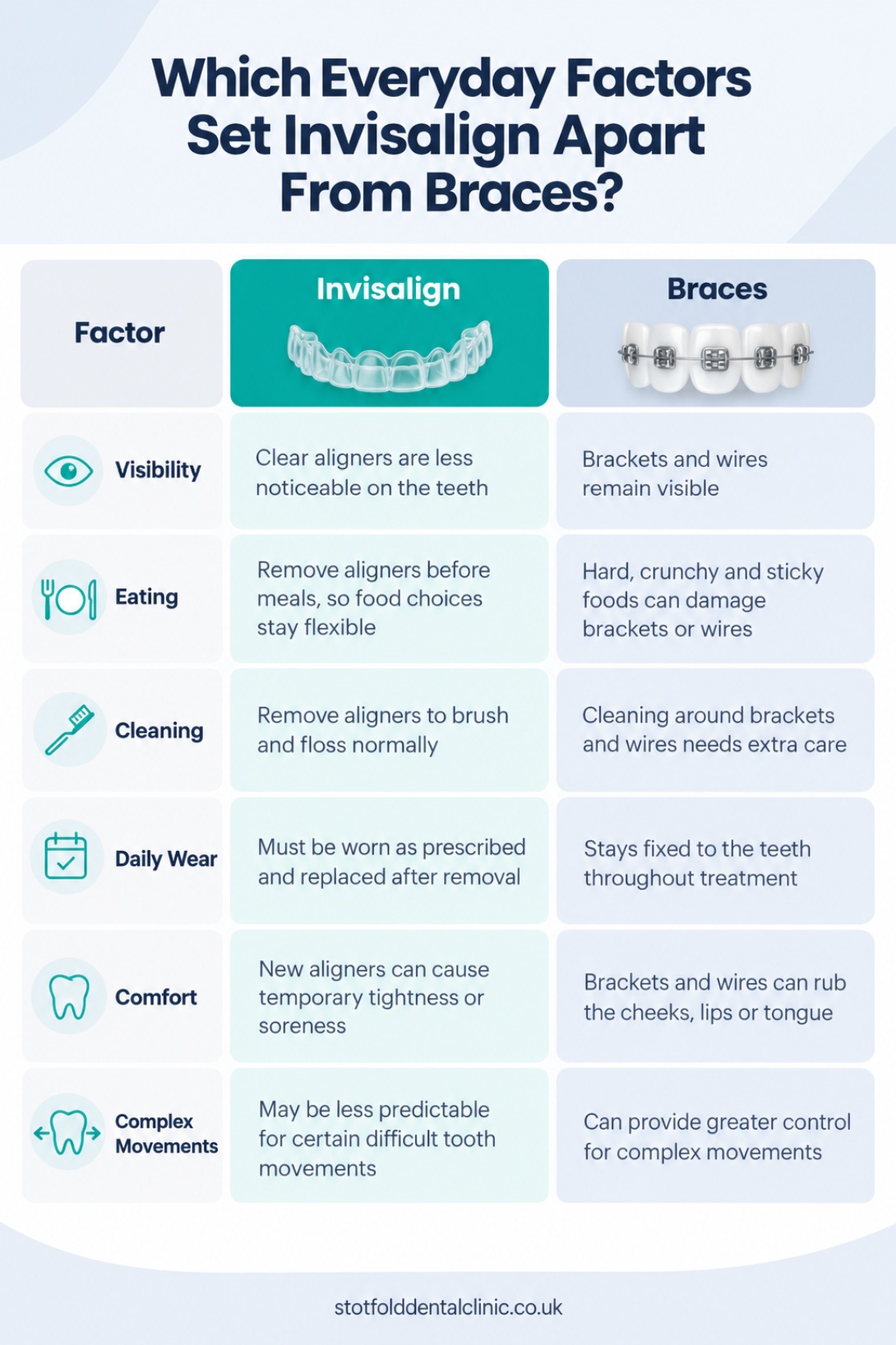
These differences become more important when you consider how each treatment fits into everyday life.
How Do Invisalign and Braces Differ in Daily Life?
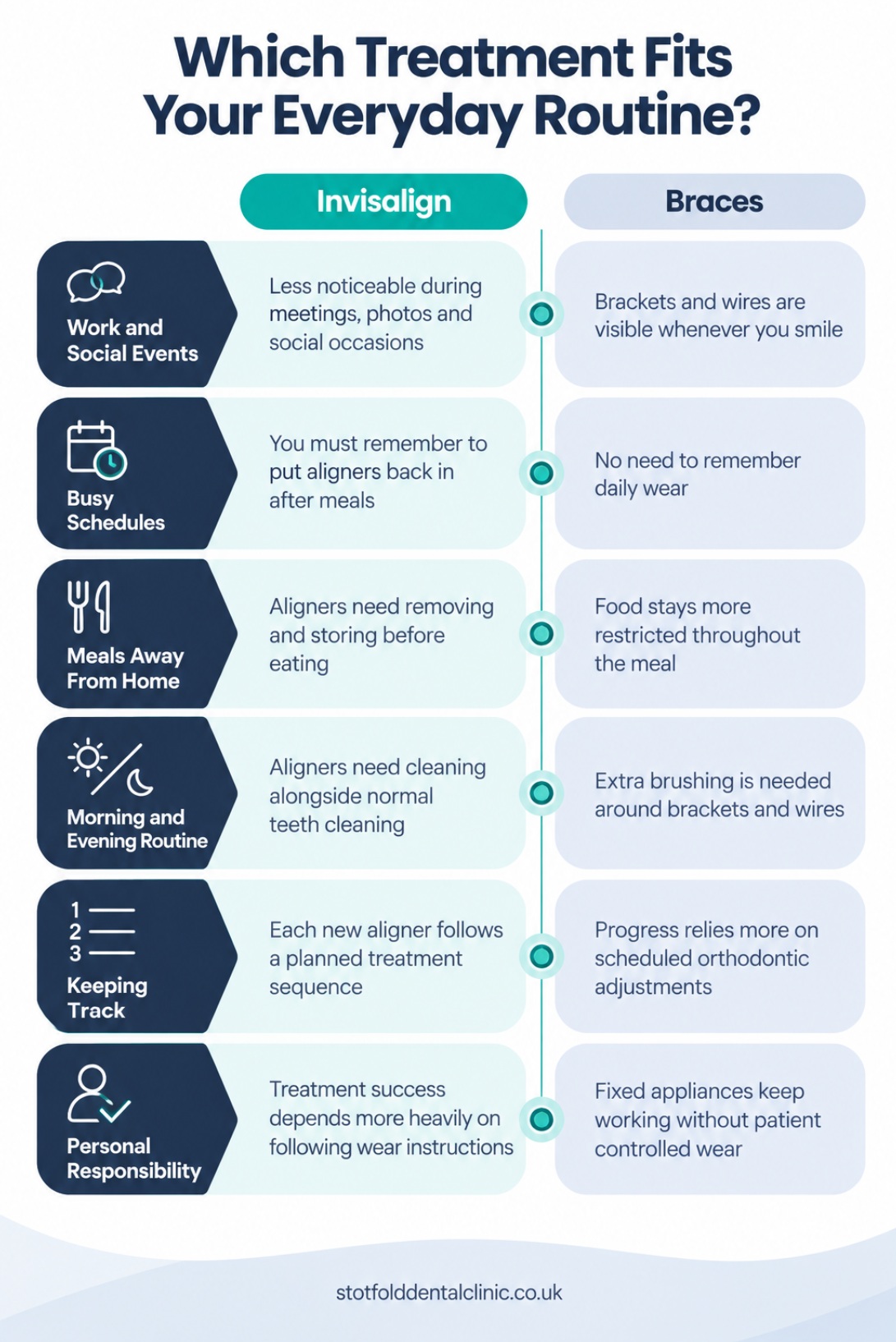
The practical differences go beyond how the treatment looks. What you eat, how you clean your teeth and how closely you follow the treatment plan can all affect your experience.
Appearance
Invisalign aligners are made from clear plastic and are designed to be less noticeable when worn. This can appeal to people who feel self conscious about visible orthodontic appliances.
Traditional braces are easier to see because brackets and wires remain attached to the teeth. Ceramic brackets can provide a less noticeable alternative to metal, although they still remain visible.
Comfort
Both treatments create pressure as the teeth move, so some tightness or soreness is expected during treatment. With Invisalign, this can happen when moving to a new set of aligners.
Braces can also cause soreness after fitting or adjustments. Brackets and wires may rub against the cheeks, lips or tongue, particularly during the early stages.
Removability
Invisalign aligners can be removed when you eat, drink certain beverages and clean your teeth. This makes it easier to maintain your normal brushing routine and avoids having an appliance permanently attached to the teeth.
That flexibility comes with a responsibility. The aligners need to be worn for the prescribed amount of time and put back in after removal.
Braces work differently because the brackets and wires remain in place throughout treatment. There is no daily decision about whether to wear the appliance.
Hygiene and Cleaning
Cleaning around Invisalign aligners is relatively straightforward because you can remove them before brushing and flossing. The aligners themselves also need to be kept clean.
Fixed braces require more attention around the brackets, wires and other components. Food debris and plaque can collect around these areas, so careful brushing and additional cleaning tools may be needed.
Food and Diet
Invisalign gives you more freedom around food because the aligners are removed before meals. You can eat your usual foods, then brush your teeth and clean the aligners before putting them back in.
Braces stay attached while you eat, so certain foods need more care. According to the British Orthodontic Society, people wearing fixed braces should avoid crunchy, hard and sticky foods because they can damage the brackets or wires.
This can mean changing how you eat some foods during treatment. Hard foods such as apples or crusty bread may need cutting into smaller pieces, while sticky sweets and chewing gum are best avoided.
Discipline and Commitment
Invisalign places more responsibility on the patient because treatment depends on wearing each aligner as instructed. You also need to keep track of the aligners and move through the planned sequence at the correct time.
Braces reduce that daily responsibility because they remain fixed to the teeth. You still need to attend appointments, maintain good oral hygiene and follow your orthodontist’s instructions, but the appliance cannot be removed at will.
How Effective Are Invisalign and Braces for Complex Cases?
This is where the difference between the two treatments becomes clinically important. Clear aligners can produce good results in suitable cases, but evidence shows that fixed appliances can have an advantage for certain complex tooth movements.
Clear aligners may be less effective for:
- Achieving adequate occlusal contacts
- Controlling tooth torque
- Increasing transverse width
- Maintaining treatment results
These limitations can make fixed braces more suitable for certain complex movements.
Clear aligner treatment plans can change as treatment progresses. A survey of British Orthodontic Society members found that 77.3% of responding orthodontists used clear aligner therapy. The same survey found that 72.9% made one to three changes to the initial digital treatment plan, mainly because the final tooth positions needed further refinement.
This does not make aligners unsuitable. It shows why case selection and ongoing monitoring matter when deciding between aligners and fixed appliances.
Why Does Invisalign or Braces Require a Clinical Assessment?
Choosing between Invisalign and braces involves more than deciding which appliance looks or feels better. The orthodontist needs to assess the teeth, gums, bite, jaw relationship and the amount and direction of tooth movement required.
According to the GDC statement on direct to consumer orthodontic treatment, deciding whether orthodontic treatment is suitable requires a full assessment of the patient’s oral health. The GDC also states that a physical clinical examination is essential to that assessment.
Orthodontic treatment, including clear aligner treatment, falls within the legal definition of dentistry in the UK. It therefore needs to be provided by an appropriately registered dental professional.
This assessment also helps identify whether there are existing dental issues that need attention before orthodontic treatment begins.
Can You Get Invisalign or Braces on the NHS?
In the UK, NHS orthodontic treatment is based on clinical need, not simply on wanting straighter or less noticeable teeth. Eligibility is assessed using the Index of Orthodontic Treatment Need (IOTN). A patient’s age and clinical circumstances also matter.
According to the NHS Business Services Authority guidance on orthodontic treatment eligibility, NHS funded orthodontic treatment is generally available to patients under 18 who have a definite clinical need. Adults are usually not eligible. There are some exceptions where an NHS commissioner approves treatment because of significant functional need.
Children who qualify for NHS orthodontic treatment are commonly treated using fixed braces. Invisalign and other clear aligners are generally accessed privately. For many patients, the decision therefore starts with whether they qualify for NHS treatment before choosing between different private options.
How to Decide Between Invisalign and Braces
Start with the orthodontic problem rather than the appliance. A straightforward case where discretion, removability and lifestyle flexibility matter may suit Invisalign, while complex movements may make fixed braces a stronger clinical option.
Your daily habits also matter. Invisalign requires consistent wear and careful tracking of the aligners. Braces remove that particular responsibility but require more attention to cleaning and food choices.
Cost and NHS eligibility can narrow the options too. Once those practical factors are considered, a dentist or orthodontist can assess which treatment can achieve the required tooth movements safely and predictably.
The final decision should come from your individual assessment rather than from comparing generic advantages on their own.
FAQs
Is Invisalign as effective as braces?
Invisalign can be effective for suitable cases. Fixed braces may provide better control for certain complex tooth movements.
Is Invisalign more expensive than braces?
Private prices vary by case, provider and treatment complexity. Invisalign is generally privately funded in the UK.
How long does Invisalign take compared with braces?
Treatment time varies according to the movements required and how consistently Invisalign is worn. Your orthodontist can estimate the likely duration.
Can adults get braces on the NHS?
Usually not. NHS orthodontics is generally focused on under 18s with a clear clinical need, with limited adult exceptions.
Do braces work faster than Invisalign?
There is no universal treatment time advantage. Duration depends on the individual case, planned movements and how treatment progresses.
Can I switch from braces to Invisalign, or vice versa?
A switch may be possible in some cases, but it depends on the treatment stage and whether the alternative appliance can achieve the planned movements.
Conclusion
Invisalign and braces both have genuine strengths, but the better option depends on your orthodontic needs, lifestyle and treatment goals. Invisalign offers discretion and removability, while fixed braces can provide greater control for complex movements.
A full clinical assessment is the right starting point before choosing either treatment. So, book your consultation today to discuss your individual suitability with a dental professional.
This article is for general information only and is not a substitute for professional dental advice. Invisalign and braces suit different orthodontic needs, lifestyles and treatment goals. A dentist or orthodontist can assess your teeth and bite to determine which treatment may be suitable for you.